Share
How deliberate teacher moves spark metacognition, ownership, and competency.
 ‌ ‌ ‌ ‌ ‌ ‌ ‌ ‌ ‌ ‌ ‌ ‌ ‌ ‌ ‌ ‌ ‌ ‌ ‌ ‌ ‌ ‌ ‌ ‌ ‌ ‌ ‌ ‌ ‌ ‌ ‌ ‌ ‌ ‌ ‌ ‌ ‌ ‌ ‌ ‌ ‌ ‌ ‌ ‌ ‌ ‌ ‌ ‌ ‌ ‌ ‌ ‌ ‌ ‌ ‌ ‌ ‌ ‌ ‌ ‌ ‌ ‌ ‌ ‌ ‌ ‌ ‌ ‌ ‌ ‌ ‌ ‌ ‌ ‌ ‌ ‌ ‌ ‌ ‌ ‌ ‌ ‌ ‌ ‌ ‌ ‌ ‌ ‌ ‌ ‌ ‌ ‌ ‌ ‌ ‌ ‌ ‌ ‌ ‌ ‌ ‌ ‌ ‌ ‌ ‌ ‌ ‌ ‌ ‌ ‌ ‌ ‌ ‌ ‌ ‌ ‌ ‌ ‌ ‌ ‌ ‌ ‌ ‌ ‌ ‌ ‌

Hi friend,


I just returned from the FullScale Symposium in New Orleans, and conversations about learner agency were alive in sessions, hallways, exhibitor booths, and cocktail hours. 


This is a topic that is near and dear to my heart, and at the center of CBE Catalyst’s purpose.


There are many ways to nurture agency in school. This month’s newsletter hones in on the power of five key pedagogical practices that, when taken together, can unlock agentic learning in the academic context—the kind of deep learning that builds the competencies young people need in order to flourish in work, learning, and community life. 


The five practices may be familiar to you, often described as “good practice”: explicit skill and strategy instruction; opportunities for collaboration; meaningful feedback; support for self-regulation; and intentional scaffolds. 


Yet on their own, these practices do not automatically instill learners with a belief in their own agency—or the tools to enact it. The missing building block? The cognitive and metacognitive thinking strategies that serve as  the power tools of the mind: noticing patterns, determining what’s important, testing ideas, and adjusting when things don’t go as planned. 


Too often, these thinking strategies remain  elusive in the classroom—invisible to learners—leaving young people dependent on teachers to drive  their learning. To develop true independence, learners need both structures that make growth visible—such as a competency framework, like the Future9—and pedagogical practices that let them practice and refine these strategies until they become second nature. When this happens, it becomes possible to learn anything, in any context, on one’s own. 


That’s what we’re exploring this month in CBE Catalyst—the practices that make the invisible visible—small, intentional moves that, over time, transform classrooms into places where learners can see their own growth and take charge of it.


Because true agency isn’t about giving students more choice. It’s about giving them the tools to choose well. 


Warmly,


Antonia


IN THIS EMAIL

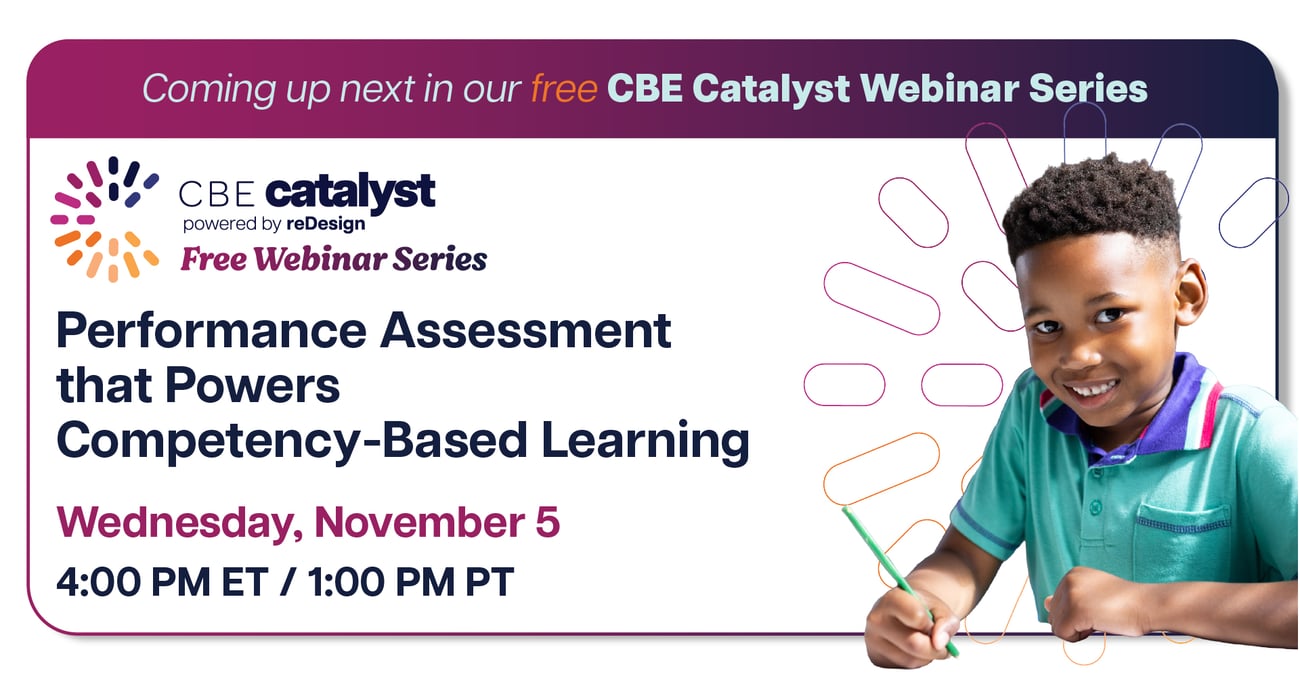
  • Upcoming Event: November’s FREE Webinar — Performance Assessment that Powers Competency-Based Learning

  • From the Field: Cognitive Apprenticeship and the Art of Making Thinking Visible

  • Problem of Practice: Small Moves, Big Shifts: The Practices That Power Learner Agency

  • Featured Tool: The Think-Aloud Co-Writer — Explicitly Teaching Agentic Learning Strategies

UPCOMING EVENT

REGISTER NOW

FROM THE FIELD

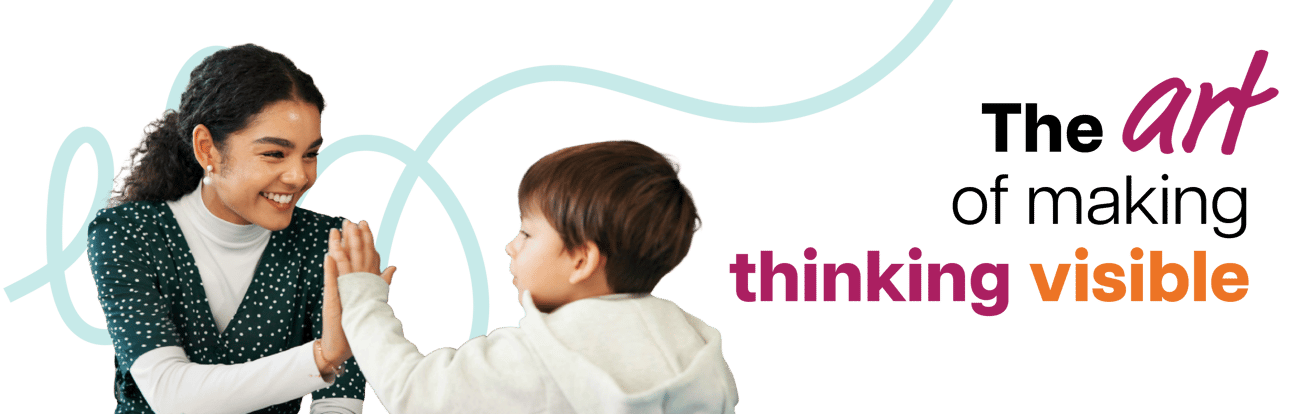
Cognitive Apprenticeship and the Art of Making Thinking Visible

Making thinking visible sits at the center of all five pedagogical practices—and of reDesign’s learning design model.


We’re continually inspired by the work of Allan Collins, John Seely Brown, and Ann Holum, whose landmark piece Cognitive Apprenticeship: Making Thinking Visible offers timeless insights into how experts support novices.


Add it to your professional library: Read “Cognitive Apprenticeship: Making Thinking Visible”


Or explore our synthesis of their work—Principles for Designing Cognitive Apprenticeship Environments—which distills key ideas into practical classroom applications.


VIEW OUR COGNITIVE APPRENTICESHIP GUIDE

CBE PROBLEM OF PRACTICE/STRATEGY

Small Moves, Big Shifts: The Practices That Power Learner Agency

In classrooms where learner agency takes root, it rarely starts with sweeping reforms—it starts with small, intentional moves.


Many of us know that personalized, student-centered learning isn’t a single strategy or program—it’s a craft we keep refining, day by day.


Through this work, we’re all learning how to:

Communicate clear, precise outcomes

describing what learners are working toward.

Continuously gather and use evidence

about progress, gaps, and needs.

Develop metacognition

so learners can monitor, evaluate, and regulate their own growth.

Shift power to learners

by giving them the tools and structures for self-directed learning.

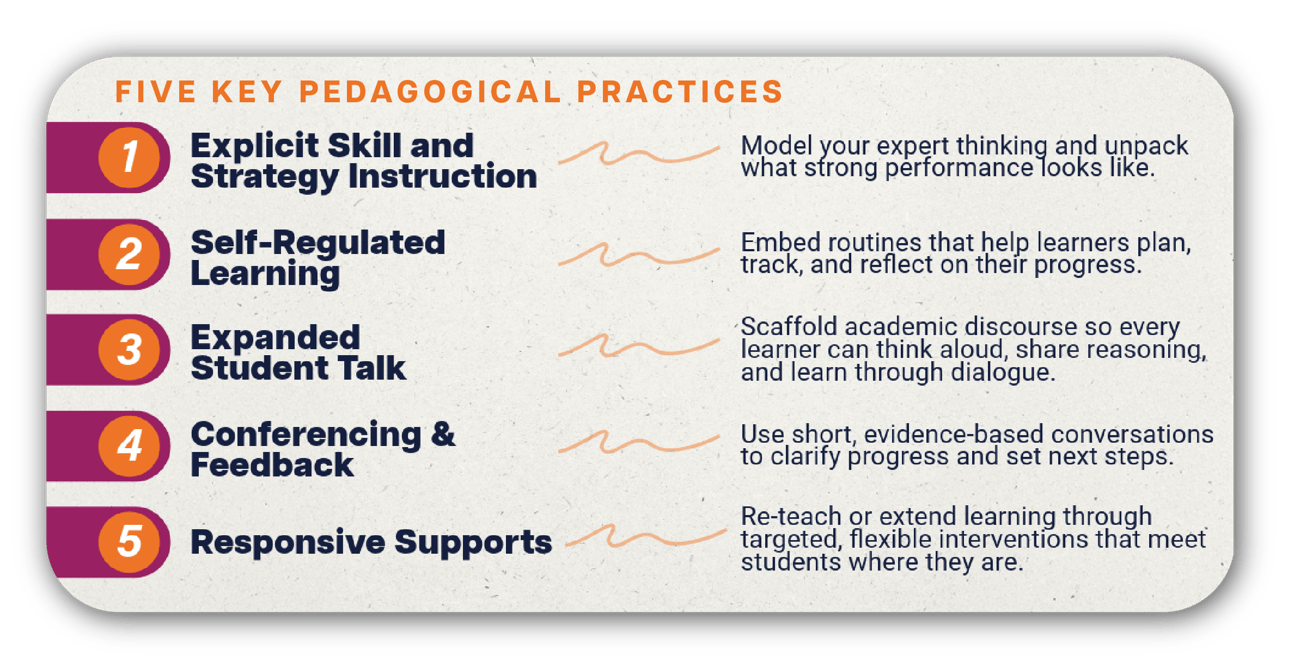
At the heart of this work are five key pedagogical practices that bring these goals to life in the classroom—one intentional move at a time:

These moves don’t require new programs or schedules—they’re subtle shifts that honor learner variability, make thinking visible, and activate independence and ownership.

EXPLORE THE 5 PRACTICES IN ACTION IN THE CLASSROOM

FEATURED TOOL

The Think-Aloud Co-Writer

Supercharge and Simplify Pedagogical Practice #1: Explicit Skill & Strategy Instruction 

You may be familiar with the term Think-Aloud (also known as metacognitive modeling): the pedagogical practice that  helps learners “see” thinking processes in action. Seeing is the first step to doing, and doing is the practice learners need in order to develop competency. 


Planning this kind of Think-Aloud often requires us to develop new skills as practitioners. That’s where reDesign’s Think-Aloud AI Co-Writer comes in. 


It walks you step-by-step through the planning process, simplifying, accelerating, and improving both your learning and design work. 


Give the tool a try. In just a few minutes, you’ll be able to:


Design authentic and equitable assessments

Use clear criteria and tools for calibration

Make assessment part of the learning process itself

TRY THE THINK-ALOUD CO-WRITER

Put these practices into motion inside CBE Catalyst!

Inside CBE Catalyst’s online professional learning community, you’ll find a Learning Pathway for each of the five Pedagogical Practices, as well as many others. All designed to support you—leaders, coaches and teachersin deepening learner-centered practices.


Our free trial gives you 7-days to see what’s it’s like to learn in one of the Learning Pathways, Learning Experience Design. LEARN MORE ➤


An annual membership gives you access to ALL of the Pathways—just $96. LEARN MORE ➤

FORWARD TO A FRIEND

Email Marketing by ActiveCampaign