Share
Webinars, tools, and new data to help your team lead CBE with clarity.
 ‌ ‌ ‌ ‌ ‌ ‌ ‌ ‌ ‌ ‌ ‌ ‌ ‌ ‌ ‌ ‌ ‌ ‌ ‌ ‌ ‌ ‌ ‌ ‌ ‌ ‌ ‌ ‌ ‌ ‌ ‌ ‌ ‌ ‌ ‌ ‌ ‌ ‌ ‌ ‌ ‌ ‌ ‌ ‌ ‌ ‌ ‌ ‌ ‌ ‌ ‌ ‌ ‌ ‌ ‌ ‌ ‌ ‌ ‌ ‌ ‌ ‌ ‌ ‌ ‌ ‌ ‌ ‌ ‌ ‌ ‌ ‌ ‌ ‌ ‌ ‌ ‌ ‌ ‌ ‌ ‌ ‌ ‌ ‌ ‌ ‌ ‌ ‌ ‌ ‌ ‌ ‌ ‌ ‌ ‌ ‌ ‌ ‌ ‌ ‌ ‌ ‌ ‌ ‌ ‌ ‌ ‌ ‌ ‌ ‌ ‌ ‌ ‌ ‌ ‌ ‌ ‌ ‌ ‌ ‌ ‌ ‌ ‌ ‌ ‌ ‌

IN THIS EMAIL

FEATURED reD RESOURCE

Your Blueprint for System-Wide CBE Change

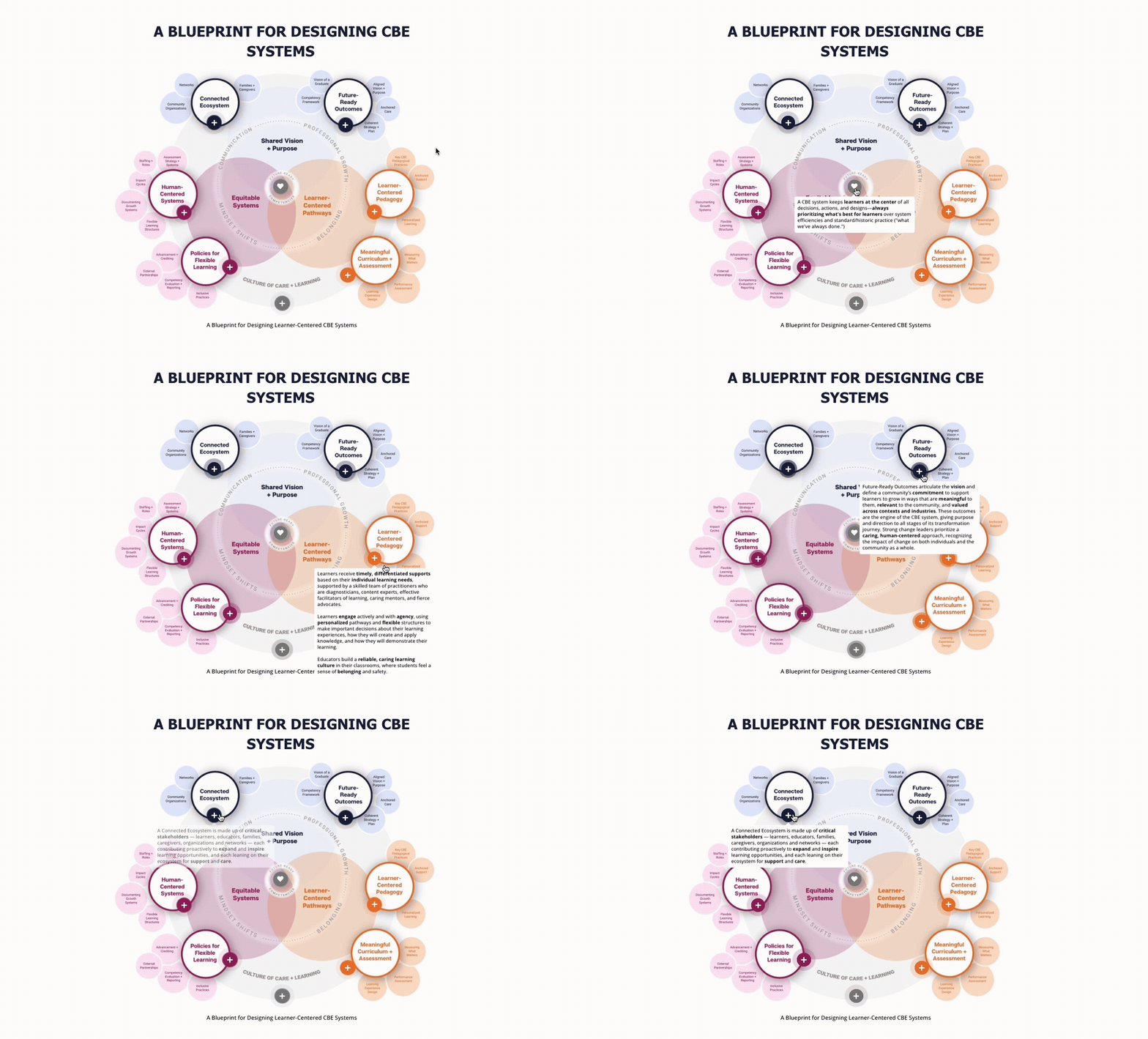
Creating learner-centered ecosystems requires more than isolated innovations. It requires strategy grounded in a deep understanding of the interdependence of each of the elements of your new CBE system. Introducing the reDesign Blueprint for Designing CBE Systems—an interactive map that organizes the 3 domains of transformation:


🔭 Shared Vision & Purpose
🛤️ Learner-Centered Pathways
⚖️ Equitable Systems & Policies


These domains are rooted in a Culture of Care & Learning. While each institution will create their own unique CBE system, grounded in the values and assets of their community, the domains of CBE transformation are visible in every strong pathway, along with the key levers for change.


Use the Blueprint to locate your team’s current work, identify gaps, and plan what's next. 


Want to go deeper?
Every lever in the Blueprint connects to rich, personalized learning inside CBE Catalyst—our online hub designed to support real-world CBE implementation.


You’ll find targeted tools, planning templates, and resources ➝ guidance from a reDesign coach to help your team chart a path forward ➝ and AI agents trained on reDesign’s approach to support your PD, design work, and decision-making.

BOOKMARK THE BLUEPRINT
DOWNLOAD THE PRINTABLE BLUEPRINT

CBE PROBLEM OF PRACTICE/STRATEGY

Press Play on CBE Progress This Summer

The hardest part of CBE often isn’t the vision—it’s the first few steps. While there are many places a school or system might begin their CBE journey, developing a clear, community-rooted set of competencies is one of the most essential. These competencies describe the skills your system commits to helping young people develop—and a strong framework should become the anchor of your entire approach.


This summer, we’re here to help you move from idea to activation. First stop? That oh-so-important competency framework.


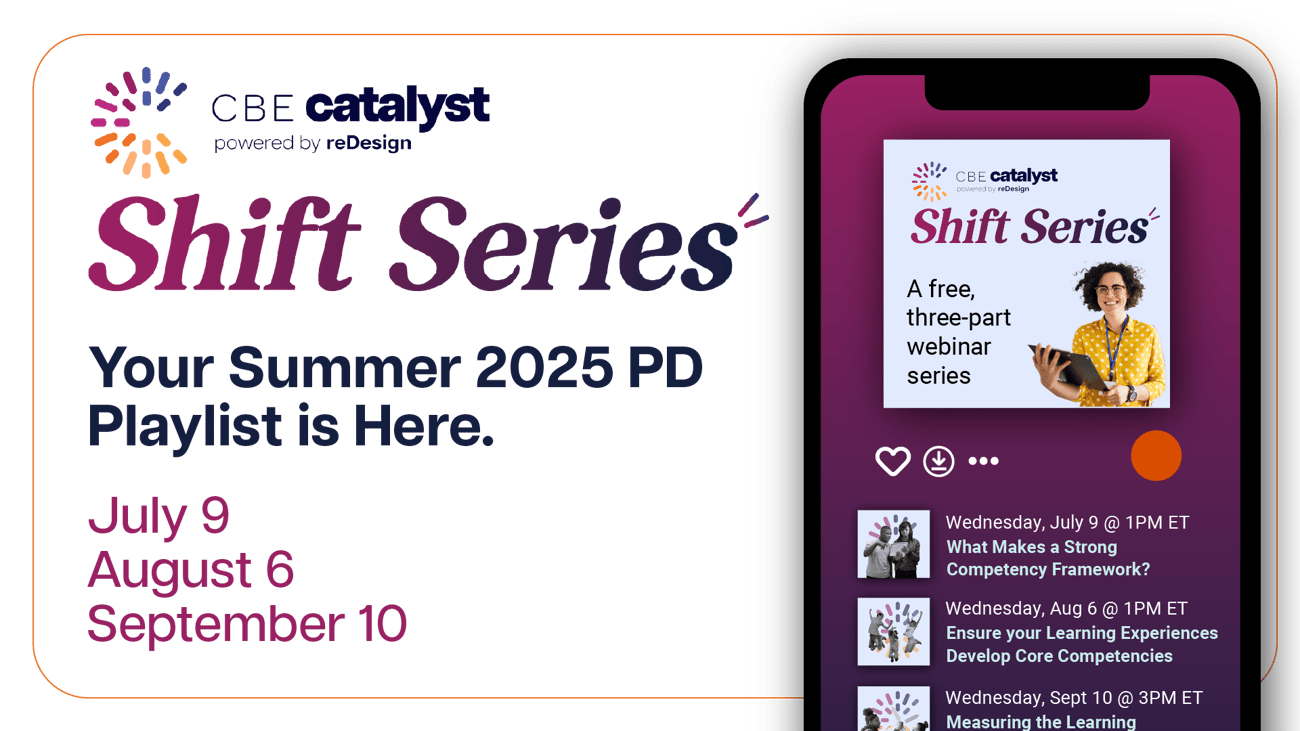
Join us July 9 for a free webinar that dives into: 


→ What Makes a Strong Competency Framework?
🗓️ Wednesday, July 9 | 1:00 PM ET


In under 50 minutes, you’ll learn:

  •  A competency framework design process that is grounded in your community or region

  • The qualities of great frameworks

  • Common design pitfalls (and how to avoid them)

  • How to assess the quality of your own framework

  • Easy access to Future9—reDesign’s research-backed framework you can adopt or adapt

REGISTER NOW

Whether you’re launching a framework or refining an existing one, this session will help you build the foundation for change.


👉 Can't make it live? Sign up to receive the recording in your inbox.

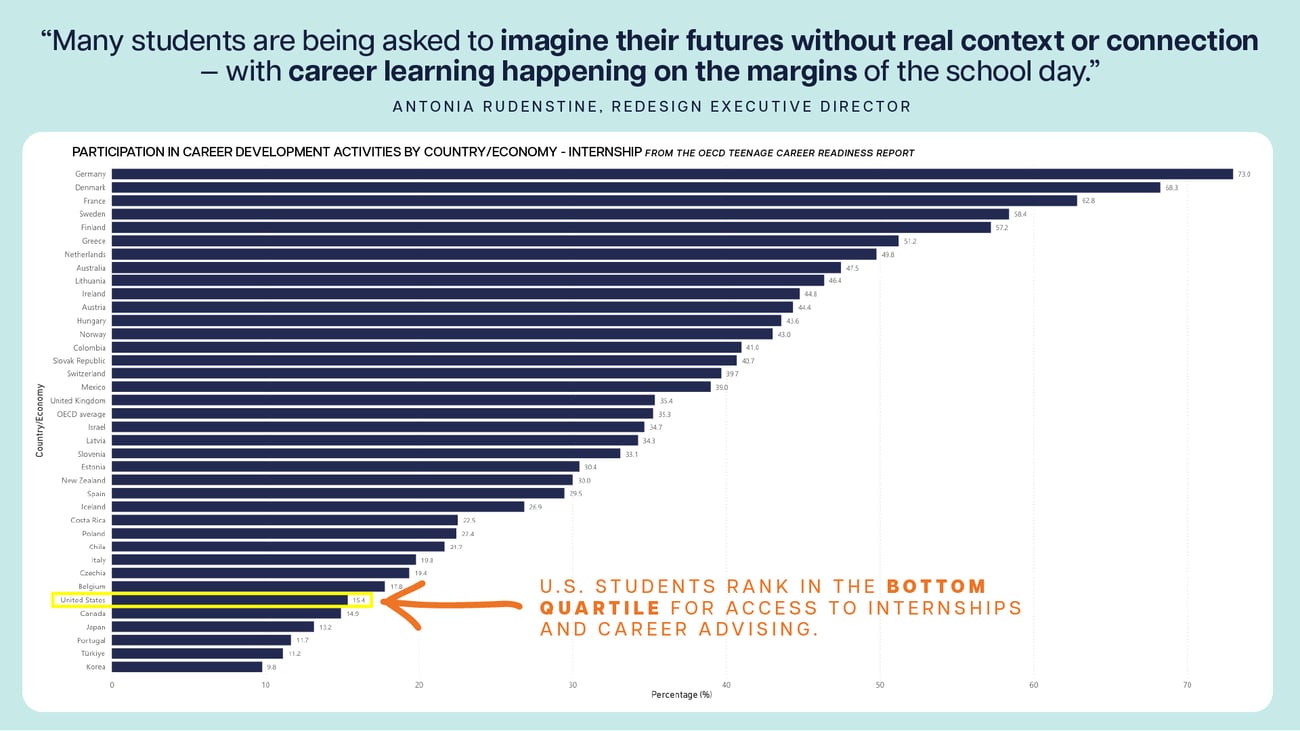
From the OECD Teenage Career Readiness Dashboard

RESOURCE FROM THE FIELD

Why Career Learning Can’t Wait

We ask students to imagine their futures, but give them little context to do so.


A new OECD dashboard brings fresh visibility to a troubling trend: U.S. students rank in the bottom quartile for access to internships and career advising. That’s not just a stat—it’s a signal.


Career-connected learning can’t be an add-on. It needs to show up:


🔬 In science labs and literature circles
🎤 In student-led exhibitions
🛠️ In project design and performance feedback
🗣️ In the conversations we facilitate every day


Before AI, career-connected learning was often time-intensive and complex to plan—especially in schools bound by prescribed curricula. But today, new tools make early exploration far more accessible.


Imagine you’re teaching genetics, linear equations, poetry, or physical education. A student with a spark of curiosity can now turn to a generative platform—not just for information, but for guidance.


Unlike a basic internet search, these tools help students connect the dots: surfacing real-world roles tied to their interests, outlining relevant skills or training pathways, and even identifying local organizations or professionals who could serve as mentors or project collaborators.


While it’s not a substitute for internships, it is a powerful first step—helping students imagine themselves in future roles and begin their journey with purpose.

EXPLORE THE DASHBOARD

Have unused PD funds? You can put them to work for the coming year. CBE Catalyst gives your team year-round access to the tools, coaching, and community to lead CBE with clarity.  


LET'S TALK

Email Marketing by ActiveCampaign