 |
|
Dear colleagues and friends,
Performance assessment has long been an anchor of competency-based learning—but in this moment, it’s more than a design choice. It’s a lifeline.
As the world of work shifts under our feet, many of the tasks students practice—summaries, argumentative essays, lab reports—are exactly the kinds of work AI can now replicate. These assignments haven’t lost all value. But on their own, their form is no longer what helps learners flourish.
Recent findings from the Burning Glass Institute call this moment an “Expertise Upheaval.” Entry-level roles that once built professional skills are disappearing, and automation is accelerating that shift. A degree alone no longer guarantees readiness for work that requires adaptability, creativity, and sound judgment.
What endures isn’t the essay or the presentation. It’s the thinking and creative work beneath them.
High-quality performance assessments make that thinking visible. Sitting at the intersection of curriculum and assessment, they provide opportunities for learners to practice the mental processes that experts automatically use as they perform at high levels:
🟦 Identifying audiences and purposes
🟦 Framing problems
🟦 Investigating ideas
🟦 Iterating toward quality
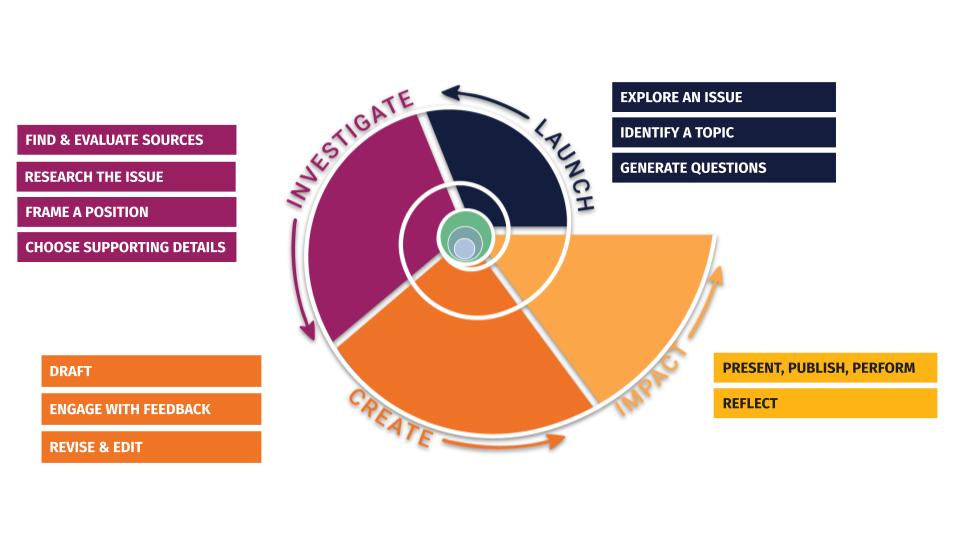
At reDesign, we call these thinking blocks—the hidden cognitive and metacognitive moves embedded in every meaningful act of creation. When made visible and practiced through learning experiences and performance assessment, they are assimilated into learners' schema, automatically available when tackling new challenges in any discipline, with or without AI.
reDesign's Creative Pathway illustrates how the thinking blocks support learning at each stage of the work of creation, design, and presentation, so students can learn how to think, not just what to produce.
|
 |
|
Each resource in this issue supports a piece of that pathway: the RRA Checklist for rigor, relevance, and agency; the AI-powered Performance Assessment Criteria Check for instant feedback on your tasks; and 100 Performance Assessments to illustrate just how many authentic performances can help learners practice—and ultimately internalize—their own thinking blocks.
Together, these tools offer a window into the deeper work happening inside CBE Catalyst—turning this architecture into lived classroom practice so every learner can think deeply, create meaningfully, and perform with purpose in a world where adaptability is the new readiness.
Warmly,
Antonia
|
|
|
 |
|
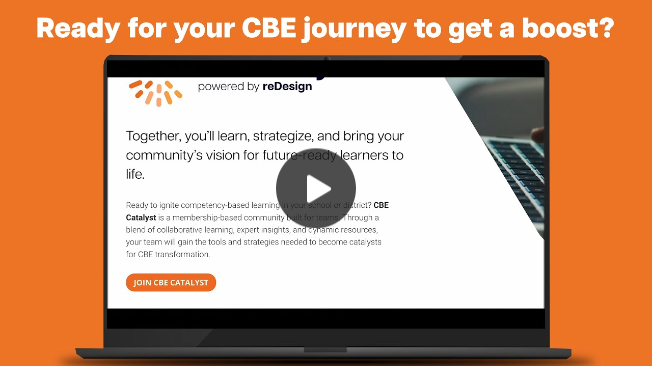
1-Minute Watch: Inside CBE Catalyst
In this short video, you’ll get a glimpse inside CBE Catalyst—how the platform supports educators and leadership teams to move beyond coverage into deep, authentic work.
We’re looking for educators who want to:
-
Structure challenges that invite real thinking
-
Design scaffolds that nurture agency
-
Create classrooms where learners don’t just complete tasks; they create meaning
If you want to see what it’s like to dig into a CBE Catalyst Learning Pathway before purchasing a membership, you can sign up for a 7-day free trial of Learning Experience Design.
→ Explore the Learning Experience Design Pathway free for 7 days
|
|
IN THIS EMAIL
→ The Expertise Upheaval: What the new economy reveals about readiness—and how schools can respond.
→ Design for What Endures: A quick lens for tuning any project through rigor, relevance, and agency.
→ Your AI Design Partner: Get instant feedback on the quality of your performance assessments.
→ 100 Authentic Ideas: Spark inspiration for real-world performance tasks across disciplines.
→ Ready to rethink how learning happens? Try the Learning Experience Design Pathway inside CBE Catalyst with a free 7-day trial. |
|
|
|
|
|
FROM THE FIELD |
|
The Expertise Upheaval: Why Entry-Level Ladders Vanished, and What Schools Can Do |
 |
|
What’s happening. Burning Glass Institute’s recent report, No Country for Young Grads (July 2025), shows a structural shift: entry-level roles in white-collar fields are shrinking even as those sectors grow. Generative AI now performs many “junior” tasks—first drafts, basic analysis, routine communications. Companies are running leaner, and hiring has tilted toward candidates who can perform on day one.
Who’s hit hardest. 22–27-year-olds with bachelor’s degrees face rising unemployment and underemployment—a historic narrowing of the advantage college once conferred.
Why this matters for schools. If the first rung is gone, readiness can’t mean “pass the test, then learn on the job.” It has to mean “practice real-world performance now”—with authentic audiences, clear criteria, feedback loops, and visible thinking processes.
Design implication. Performance assessments, projects, and tasks that build the very habits the market now rewards are more critical than ever: clarifying purpose, understanding audience, investigating, designing and creating, calibrating, and iterating—the thinking processes that endure even when the specific tasks evolve.
|
|
|
| READ THE REPORT |
|
|
 |
|
CBE CATALYST RESOURCE |
|
Design for Rigor–Relevance–Agency (RRA)
Designing tasks that build performance isn’t about adding more work—it’s about sharpening the work that’s already happening. The Rigor–Relevance–Agency (RRA) Checklist helps educators ask three core questions:
➊ Rigor: Is this performance assessment stretching students’ thinking and giving them a chance to produce evidence of meaningful competencies?
➋ Relevance: Is it grounded in authentic problems, audiences, and perspectives that matter—to students and to the world they’re stepping into?
➌ Agency: Does it nurture learners’ agency by making their process visible, so they can plan, act, reflect, and revise like developing experts?
|
|
Each element contributes to a single aim: learning that performs. When students engage in tasks designed with RRA in mind, they’re not just completing assignments—they’re practicing the thinking patterns that underlie expert work and, over time, internalizing them. |
| BOOKMARK THE RRA CHECKLIST |
|
|
 |
|
AI TOOL |
|
Performance Assessment Criteria Check
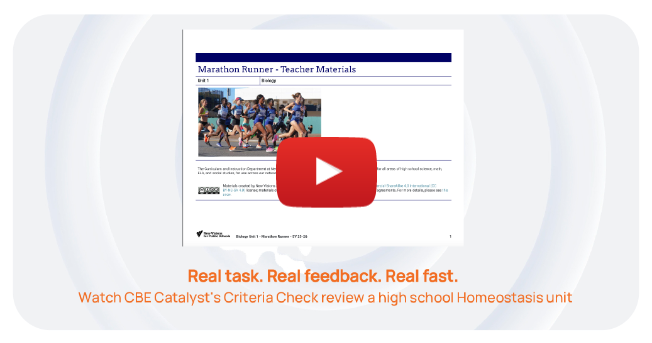
Even the best-designed task can drift from its purpose once you’re deep in the day-to-day of teaching. The Performance Assessment Criteria Check—one of CBE Catalyst’s AI bots—is designed to lighten your design load.
This bot reviews your existing performance assessment and provides immediate feedback on how well it aligns with the high-quality criteria in the RRA Checklist. It’s like a design partner that helps you see what’s strong, what’s missing, and where a small shift could make students’ thinking more visible and more powerful.
Use it to test-drive a new task, refine an old favorite, or calibrate as a team. In just minutes, you’ll have insights that can elevate a single project—or begin to shift how your department approaches assessment design.
In CBE Catalyst, educators can use feedback to inform their work with another AI tool: The Performance Assessment Architect. If you are working on Performance Assessment, we’d love to hear what you tried and what you noticed. |
|
|
|
| TRY THE PERFORMANCE ASSESSMENT CRITERIA CHECK |
|
|
 |
|
PRINTABLE |
|
100 Performance Assessment Ideas
Once you start seeing performance as the goal, the possibilities multiply.
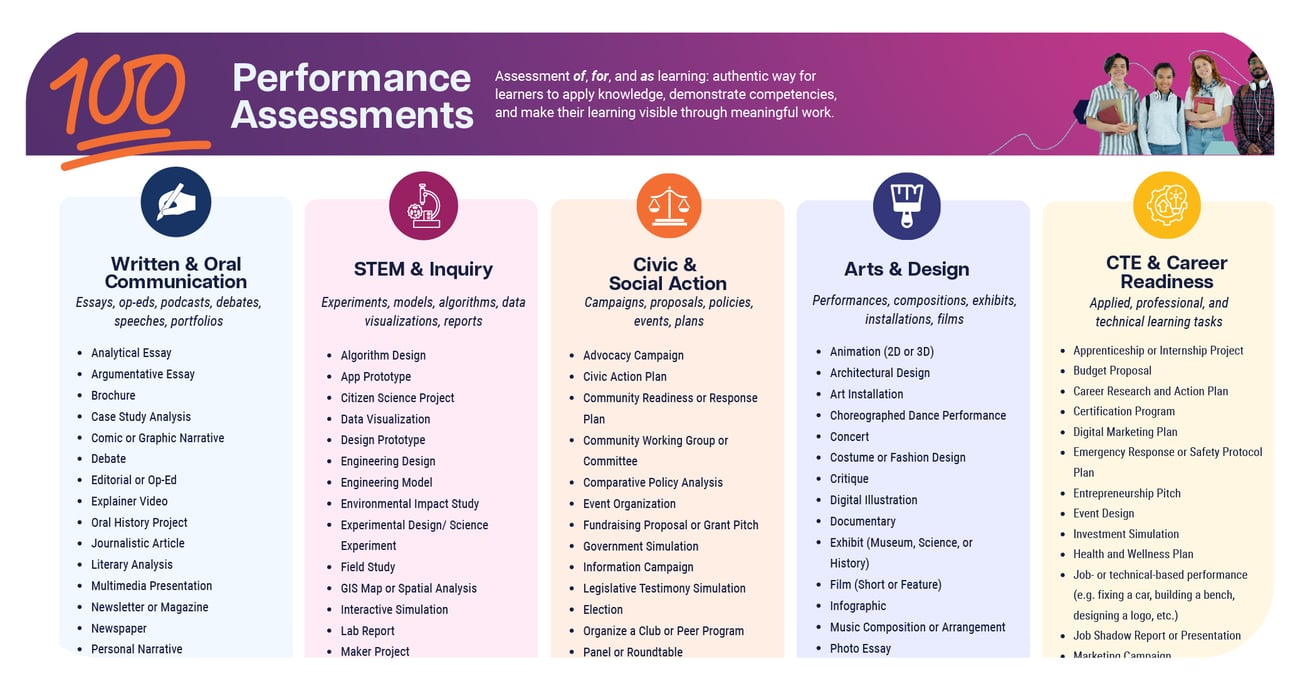
The 100 Performance Assessment Ideas list is an open invitation to reimagine what learning can look like in your context—from analytical essays and podcasts to environmental impact studies, advocacy campaigns, or design prototypes.
Each idea is a doorway into authentic work that asks students to think, create, and perform with purpose. Behind every one of them sits the same architecture: clear criteria, meaningful audiences, visible thinking, and opportunities for reflection and revision.
Use this list as inspiration to build new performances—on your own, or with assistance from tools and resources in CBE Catalyst. We’d love to hear how you are helping learners practice the skills and creative processes that will endure long after your project ends. |
| DOWNLOAD THE 100 PERFORMANCE ASSESSMENTS PDF |
|
|
|
|
|
|
|
Ready to rethink performance assessment?
If you’re ready to move beyond one-off tools and build a coherent performance assessment system—with learning pathways, exemplars, AI design partners, and a community of educators doing this work together—you can explore the Learning Experience Design Pathway with a free 7-day trial.
Inside the trial, you’ll:
→ Redesign one learning experience with a guided challenge
→ Access templates and exemplars to make your redesign classroom-ready |
|
|
|
|
|
|
Competency-Based Learning • Made Actionable
A learning and design community for educators, schools, and systems moving from vision to daily practice in competency-based learning.
|
What leaders are saying
“The quality of the resources really helps people move from whatever level they're at, to understanding and starting to apply ideas.”
— CBE Leader |
CBE Catalyst is powered by reDesign · Learner-centered, competency-based learning design & strategy |
|
|
|
|
|
|
|
|